

GitHub Copilot CLI is the latest Agentic CLI tool. Yet another Agentic CLI tool in the same style of Claude Code, Cursor CLI, Gemini CLI, Codex CLI and Qwen Code (and probably others that I am forgetting). So far I have tried all of these except for Qwen, and am now trying GitHub Copilot CLI as well.
All Agentic CLI tools look the same
All of these tools are superficially similar. Claude Code, Codex CLI, Cursor CLI, Gemini CLI, Qwen Code and now GitHub Copilot CLI all have a TUI design that looks almost exactly the same, not even trying to hide that they’re copying each other. The notable exception is Codex CLI, which has its own TUI design. Honestly though I find Codex’s TUI to be inferior and kind of wish it also copied the others. I think the common design works well and don’t mind it, it’s just funny that all of these companies copy each other.
Another thing that is similar is that all these tools have npm as their primary installation option. While most tools can also be installed in other ways (such as Homebrew), npm is usually recommended first in their respective README files. Of course, npm has been widely-used for years and many developers already have it installed (these tools are primarily for developers, though they can do more than coding); however, I’ve personally never before seen npm recommended as the primary installation method before this wave of Agentic CLI tools started. Some of the tools are written in TypeScript so it makes sense. On the other hand, there’s Codex CLI, which has its own design and is written in Rust, but nevertheless adapted to work with npm (TIL Rust binaries can be distributed on npm).
Agentic CLI tools have differences
I mentioned these tools are superficially similar, however that doesn’t mean they all work the same. Outside of design and installation method, there’s the matter of functionality and how well these tools actually work. Differences include:
Model
Some tools are designed to work with one company’s models. Claude Code of course uses Claude Sonnet and Claude Opus. OpenAI’s Codex CLI uses GPT-5 models (including GPT‑5-Codex). Gemini CLI uses Gemini 2.5 and 3 (Pro with a fallback to Flash). Other tools support a variety of different models through one service, for example Cursor CLI and GitHub Copilot CLI (the same is true for their non-CLI offerings). Others allow you to BYO (Bring Your Own) API keys (notably OpenCode).
Tools & Agentic Abilities
Even when two tools use the same AI model, that doesn’t necessarily mean they will work the same. These tools have agentic abilities, enhanced with tools and prompts. Tools can be built in or provided through MCP. As an example, Claude Code has a wide variety of built-in tools that allow it to read and write local files, browse the web (Search and Fetch websites) and more. On the other hand, while Codex Is Improving, it still does not have as many built-in tools as Claude Code. When tools are missing or limited, the gap can be bridged either with other CLI programs (that these agentic tools know how to run directly) or MCP servers. Most if not all of these tools support both running CLI commands and interacting with MCP servers. Notably, Cursor CLI now supports MCP as well (when I first tried it, Cursor CLI was missing MCP support).
License
Not all of these tools are open source. In a way that is somewhat deceiving, several of these tools have a GitHub repo that is little more than a closed-source LICENSE and README, but does not actually include any code. At present, this even includes GitHub Copilot CLI, which is marked as Public Preview and has Pre-release License Terms (it is not clear to me what the license terms would be after release). Claude Code and Cursor CLI are also closed source (others may have copied CC’s design, but not its code). Gemini CLI is open source and was later forked to Qwen Code, which is also open source (both Apache-2.0). OpenCode is also open source (as its name implies), under MIT. charmbracelet/crush (from the same people who created some of my favorite Go CLI and TUI Frameworks) uses this weird license: Functional Source License, Version 1.1, MIT Future License.
Pricing & Usage Limits
These tools have different limits.
Claude Code
Out of all of these tools I have (so far) used Claude Code the most and am most familiar with its pricing and usage limits. I am using Claude Pro on the $20 a month plan. Claude Code also has the crazy expensive Max plans ($100 or $200 a month). I have mentioned previously in my Claude Code notes about my experience using the Claude Code $20 plan. My experience honestly hasn’t changed much. While there was some drama about Claude Code changing usage limits, I still rarely run into usage limits. When I do, I have to wait at most a few hours for the usage limits to reset. In that time I can either use other tools or take a break. Other than not having access to the Opus model on CC, I don’t feel like I’m missing anything by not being on Max and am still baffled at how people justify the price of those Max plans. ccusage implies I use more than $100 a month, significantly more than what I pay. Anthropic either operates at a loss or can somehow afford to do that since it’s their own models.
Gemini CLI
Gemini CLI has a generous free tier and is what I currently recommend for people wanting to try an agentic tool for free. I’m not sure whether my Google AI Pro trial increases my Gemini CLI usage limits or if it’s unrelated, I’m honestly kind of confused with Google’s various AI plans (in typical Google fashion).
Codex
Included with paid ChatGPT plans including Plus, Pro and Team.
BYO (Bring Your Own) API keys
Ironically, the FOSS tools such as opencode and crush might actually be more expensive in this case. When using an API key you have to pay the “real” cost of running the AI model, which can end up being significantly more expensive than a set plan. The same is true when using Claude Code with an API key instead of a plan; in all but very moderate use a plan would make more sense. Even the expensive Max plans often end up cheaper than what equivalent API use would cost.
My Opinion
Claude Code remains my most used agentic CLI tool. Nevertheless, I am still actively experimenting with other tools. I have used Gemini CLI increasingly more in recent weeks (Gemini’s free tier is really good), and am also trying Codex due to its improvements. However, while these tools feel similar in many ways and the competition is closer than ever, I still feel that Claude Code with Claude Sonnet 4.5 is noticeably better than all other tools that I have used. This may change in the near future as all of these tools are actively developed and new ones are introduced all the time.
This is in addition to other AI tools which I am also actively using. Right now I am mainly using the web and app versions of ChatGPT, Gemini, Claude and Perplexity Pro (I also use Microsoft Copilot at work, but it’s not very good).
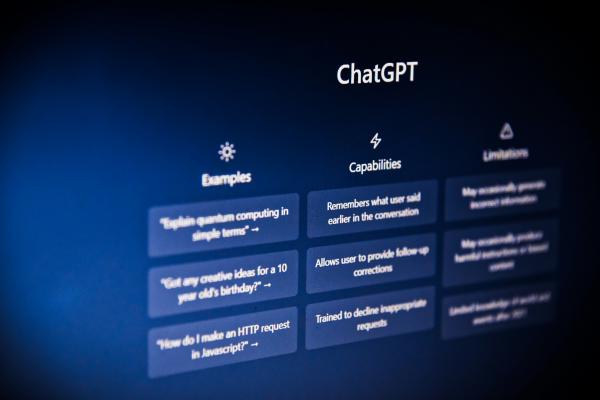
Featured image by Steve Johnson on Unsplash.